
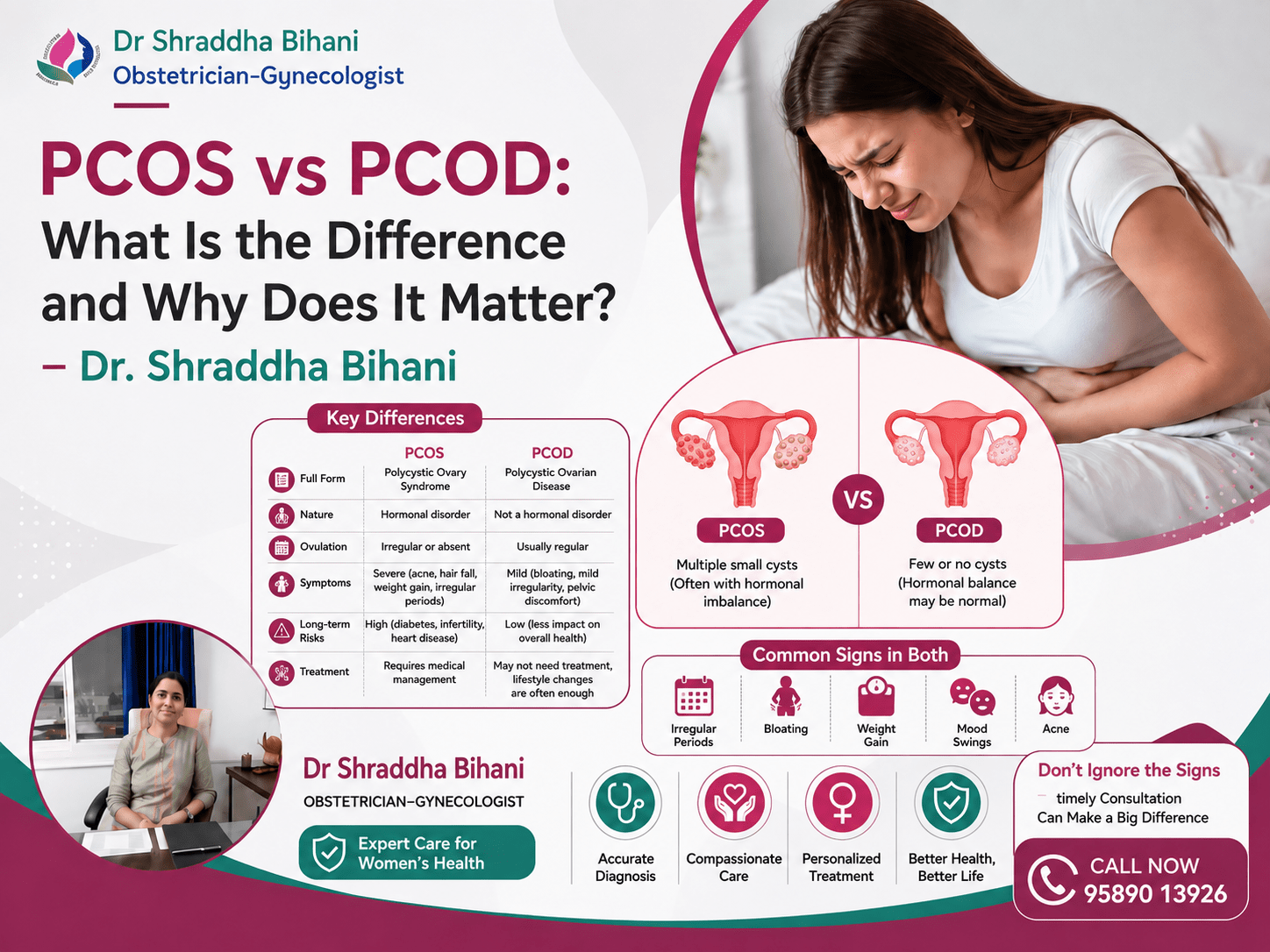
PCOS Treatment in Indore is important for women experiencing irregular periods, hormonal changes, acne, unwanted hair growth, weight changes, or difficulty conceiving. PCOS and PCOD are terms that are often used interchangeably, but they are not always used in exactly the same way. Understanding the difference can help women recognize symptoms early and seek appropriate medical care.
Dr. Shraddha Bihani, one of the Best Gynecologists in Indore, provides comprehensive evaluation and personalized treatment for PCOS, menstrual disorders, hormonal problems, infertility concerns, and other gynecological conditions. With more than 15 years of clinical experience, she focuses on evidence-based care and helps women understand their condition so they can make informed decisions about their health.
Best Gynecologist in Indore – Dr. Shraddha Bihani
Best Gynecologist in Indore is Dr. Shraddha Bihani, a dedicated Obstetrician and Gynecologist with more than 15 years of clinical experience in managing a wide range of women’s health concerns.
Dr. Shraddha Bihani provides expert care for PCOS, menstrual disorders, hormonal imbalance, infertility, pregnancy care, high-risk pregnancy, fibroids, ovarian cysts, endometriosis, and other gynecological conditions. Her patient-centred approach focuses on understanding each woman’s symptoms, medical history, lifestyle, reproductive goals, and individual healthcare needs.
She believes that proper diagnosis is the first step toward effective treatment. Rather than focusing only on individual symptoms, Dr. Bihani evaluates the overall health of the patient and recommends a personalized treatment plan.
What is PCOD?
PCOD (Polycystic Ovary Disease) is a term commonly used to describe a pattern of hormonal and ovarian changes that may be associated with irregular ovulation and multiple small follicles in the ovaries.
In everyday clinical conversations, PCOD and PCOS are sometimes used interchangeably. However, PCOS is the more widely recognized medical term and represents a specific clinical syndrome with established diagnostic criteria.
Having multiple follicles or a polycystic appearance of the ovaries on an ultrasound does not automatically mean that a woman has PCOS. Diagnosis requires consideration of symptoms, medical history, physical findings, and appropriate investigations.
This is why women should not try to diagnose PCOS or PCOD based on an ultrasound report alone.
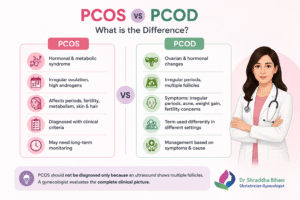
PCOS vs PCOD: What is the Difference?
Although the terms PCOS and PCOD are often used together, there are important differences in how they are understood.
| PCOS | PCOD |
|---|---|
| PCOS stands for Polycystic Ovary Syndrome. | PCOD stands for Polycystic Ovary Disease. |
| It is a recognized hormonal and metabolic syndrome. | It is a commonly used term for certain ovarian and hormonal changes. |
| It may involve irregular ovulation, increased androgen levels, and metabolic problems. | It may be used to describe irregular ovulation and multiple ovarian follicles. |
| It can affect menstrual health, fertility, metabolism, skin, and hair growth. | Symptoms may include irregular periods, weight changes, acne, or fertility concerns. |
| Diagnosis is based on clinical assessment and established criteria. | The term may be used differently in different clinical settings. |
| Long-term monitoring may be important depending on the individual’s symptoms and risk factors. | Management depends on the symptoms and underlying hormonal or reproductive concerns. |
The most important point is that PCOS should not be diagnosed only because an ultrasound shows multiple follicles. A gynecologist evaluates the complete clinical picture before confirming the diagnosis.
PCOS vs PCOD Symptoms
PCOS and conditions described as PCOD can share several symptoms. These symptoms may include:
Irregular Periods
Periods may occur less frequently, become unpredictable, or sometimes be missed.
Acne and Oily Skin
Hormonal changes, particularly increased androgen activity, may contribute to persistent acne and oily skin.
Excess Hair Growth
Some women may develop increased hair growth on the face, chest, abdomen, or other areas.
Hair Thinning
Hormonal changes may contribute to thinning of scalp hair or increased hair fall.
Weight Changes
Some women with PCOS may gain weight or find weight management more difficult, particularly when insulin resistance is present.
Difficulty Conceiving
Irregular or absent ovulation can make conception more difficult for some women.
Darkened Skin
Insulin resistance may sometimes be associated with dark, thickened areas of skin, particularly around the neck or other body folds.
Not every woman experiences all of these symptoms. Some women may have PCOS with relatively mild symptoms, while others may have more noticeable hormonal or metabolic concerns.
Why Does the Difference Between PCOS and PCOD Matter?
Understanding the difference matters because treatment should be based on the woman’s actual symptoms, diagnosis, health risks, and reproductive goals rather than simply the label PCOS or PCOD.
For example, a woman whose main concern is irregular periods may require a different treatment approach from someone who is trying to conceive. Similarly, women with insulin resistance, significant weight changes, acne, or excess hair growth may require additional evaluation and management.
PCOS can also have longer-term health implications for some women. Depending on the individual, it may be associated with insulin resistance, type 2 diabetes, abnormal cholesterol levels, and other metabolic concerns.
Early evaluation and appropriate lifestyle and medical management can help reduce potential complications.
How is PCOS Diagnosed?
PCOS Treatment in Indore begins with a detailed evaluation rather than relying on one test.
Dr. Shraddha Bihani may assess:
- Menstrual history
- Symptoms and reproductive history
- Weight and body composition
- Blood pressure
- Signs of increased androgen activity
- Blood sugar levels when appropriate
- Hormonal tests when indicated
- Other blood investigations
- Pelvic ultrasound when required
PCOS is generally diagnosed using established clinical criteria after other possible causes of similar symptoms have been considered.
An ultrasound showing multiple follicles alone does not confirm PCOS.
Can PCOS Be Treated?
Yes. PCOS can be effectively managed, although the treatment approach depends on the individual woman.
There is no single treatment that is suitable for every patient. Management may focus on controlling symptoms, improving menstrual regularity, supporting fertility, addressing metabolic health, and reducing long-term health risks.
Treatment may include:
Lifestyle Changes
A healthy diet, regular physical activity, adequate sleep, and maintaining a healthy weight can be important parts of PCOS management.
Even modest improvements in lifestyle and weight, when appropriate, may help improve metabolic health and menstrual regularity in some women.
Medicines for Menstrual Regulation
Depending on the patient’s symptoms and reproductive goals, prescribed hormonal medicines may be used to regulate periods and manage hormonal symptoms.
Treatment for Acne and Excess Hair Growth
Specific medical treatments may be recommended when acne, unwanted hair growth, or other androgen-related symptoms are significant.
Management of Insulin Resistance
Women with insulin resistance or metabolic concerns may require dietary, lifestyle, and medical management based on their individual health status.
Fertility Treatment
Women with PCOS who are trying to conceive may benefit from treatment aimed at improving ovulation. The appropriate treatment depends on the woman’s age, fertility history, ovulation pattern, and other factors.
PCOS and Pregnancy
PCOS does not mean that a woman cannot become pregnant.
However, irregular ovulation may make conception more difficult for some women. With appropriate evaluation and treatment, many women with PCOS can successfully conceive and have healthy pregnancies.
Women planning pregnancy should discuss their menstrual cycles, weight, blood sugar levels, medications, and overall health with their gynecologist.
Preconception care can help identify and manage potential risk factors before pregnancy.

Can PCOS Be Prevented?
PCOS itself cannot always be prevented because genetics and other biological factors can contribute to its development.
However, maintaining a healthy lifestyle can support hormonal and metabolic health.
Helpful measures may include:
- Maintain a healthy and balanced diet.
- Stay physically active.
- Maintain a healthy body weight.
- Get adequate sleep.
- Track menstrual cycles.
- Avoid unnecessary self-medication.
- Attend regular gynecological check-ups.
- Seek medical advice for persistent irregular periods.
- Do not ignore symptoms such as excessive hair growth, persistent acne, or difficulty conceiving.
Early evaluation can help women understand their condition and begin appropriate management.
When Should You See a Gynecologist for PCOS or PCOD?
You should consider consulting Dr. Shraddha Bihani if you experience:
- Irregular or missed periods
- Periods occurring very infrequently
- Persistent acne
- Excess facial or body hair
- Unexplained hair thinning
- Significant weight changes
- Difficulty becoming pregnant
- Symptoms of insulin resistance or metabolic problems
- Repeatedly abnormal menstrual cycles
- An ultrasound report suggesting polycystic ovaries
Women should especially seek medical advice if irregular periods continue for several months or symptoms are interfering with daily life or fertility plans.
Why Choose Dr. Shraddha Bihani for PCOS Treatment in Indore?
Dr. Shraddha Bihani is recognized as one of the Best Gynecologists in Indore, offering comprehensive and personalized care for PCOS, menstrual disorders, hormonal concerns, fertility problems, pregnancy care, and other gynecological conditions.
With more than 15 years of clinical experience, she combines modern medical knowledge with a compassionate and patient-centred approach.
Patients choose Dr. Shraddha Bihani because of:
- 15+ Years of Clinical Experience
- Trusted Gynecologist in Indore
- Expertise in PCOS and Menstrual Disorders
- Personalized Treatment Plans
- Comprehensive Women’s Healthcare
- Fertility and Pregnancy Care
- Evidence-Based Medical Treatment
- Patient-Centred and Compassionate Approach
- Clear Communication
- Long-Term Health Guidance
- Focus on Preventive Women’s Healthcare
Dr. Bihani takes time to understand each patient’s concerns and explains the condition and treatment options in simple language. Her goal is to help women manage their symptoms while supporting their long-term reproductive and overall health.
Summary
PCOS vs PCOD is a common topic of confusion among women. Although both terms may be used to describe hormonal and ovarian problems, PCOS is the more established medical diagnosis and represents a broader hormonal and metabolic syndrome. PCOD is a term that is commonly used in everyday practice, but its meaning may vary.
Women should not assume that they have PCOS simply because an ultrasound shows multiple ovarian follicles. Proper diagnosis requires a complete evaluation of symptoms, menstrual history, hormone-related findings, and other possible causes.
With more than 15 years of clinical experience, Dr. Shraddha Bihani, one of the Best Gynecologists in Indore, provides personalized evaluation and treatment for PCOS, menstrual irregularities, hormonal concerns, infertility, and other gynecological conditions.
Early diagnosis, healthy lifestyle habits, appropriate medical treatment, and regular follow-up can help women manage PCOS effectively and protect their reproductive and long-term health.
FAQs – PCOS vs PCOD
What is the main difference between PCOS and PCOD?
PCOS stands for Polycystic Ovary Syndrome and is a recognized hormonal and metabolic syndrome. PCOD is a term commonly used to describe certain ovarian and hormonal changes, but it does not always have a consistent medical definition.
Is PCOS and PCOD the same thing?
The terms are often used interchangeably in everyday conversations, but medically they should not automatically be considered identical. PCOS is a specific clinical syndrome with established diagnostic criteria, while PCOD is a commonly used term whose meaning can vary.
Can an ultrasound confirm PCOS?
No. An ultrasound showing multiple ovarian follicles alone does not confirm PCOS. A gynecologist considers symptoms, menstrual history, hormonal findings, and other possible causes before making a diagnosis.
What are the common symptoms of PCOS?
Common symptoms include irregular periods, difficulty with ovulation, acne, excess facial or body hair, hair thinning, weight changes, insulin resistance, and difficulty conceiving. Symptoms vary from woman to woman.
Can PCOS cause infertility?
PCOS can affect ovulation and may make conception more difficult for some women. However, PCOS does not mean that pregnancy is impossible. Appropriate fertility evaluation and treatment can help many women conceive.
Can PCOS be cured permanently?
PCOS is generally considered a long-term condition that can be effectively managed. Treatment focuses on controlling symptoms, improving metabolic and reproductive health, and reducing potential long-term risks.
Can women with PCOS have regular periods?
Yes. Some women with PCOS may have relatively regular periods, particularly when other symptoms are mild. A complete medical evaluation is important rather than relying on one symptom alone.
Does PCOS always cause weight gain?
No. PCOS can occur in women of different body types. While weight gain and insulin resistance are common in some women with PCOS, they are not present in everyone.
When should I consult a gynecologist for PCOS symptoms?
You should consult a gynecologist if you have persistent irregular periods, excessive hair growth, acne, unexplained weight changes, difficulty conceiving, or an ultrasound report suggesting polycystic ovaries.
Conclusion – PCOS vs PCOD: What Is the Difference and Why Does It Matter?
PCOS Treatment in Indore plays an important role in helping women understand and manage hormonal, menstrual, metabolic, and reproductive concerns. PCOS and PCOD are frequently confused, but the terms should not automatically be treated as identical.
PCOS is a recognized hormonal and metabolic syndrome that can affect periods, ovulation, fertility, skin, hair, and metabolic health. PCOD is a commonly used term for certain ovarian and hormonal changes, but its clinical meaning may vary. Therefore, proper diagnosis should always be based on a complete medical evaluation rather than an ultrasound report alone.
Dr. Shraddha Bihani, one of the Best Gynecologists in Indore, provides personalized care for PCOS, menstrual disorders, hormonal concerns, fertility problems, and other gynecological conditions. With more than 15 years of clinical experience, she focuses on accurate diagnosis, individualized treatment, patient education, and long-term women’s health.