
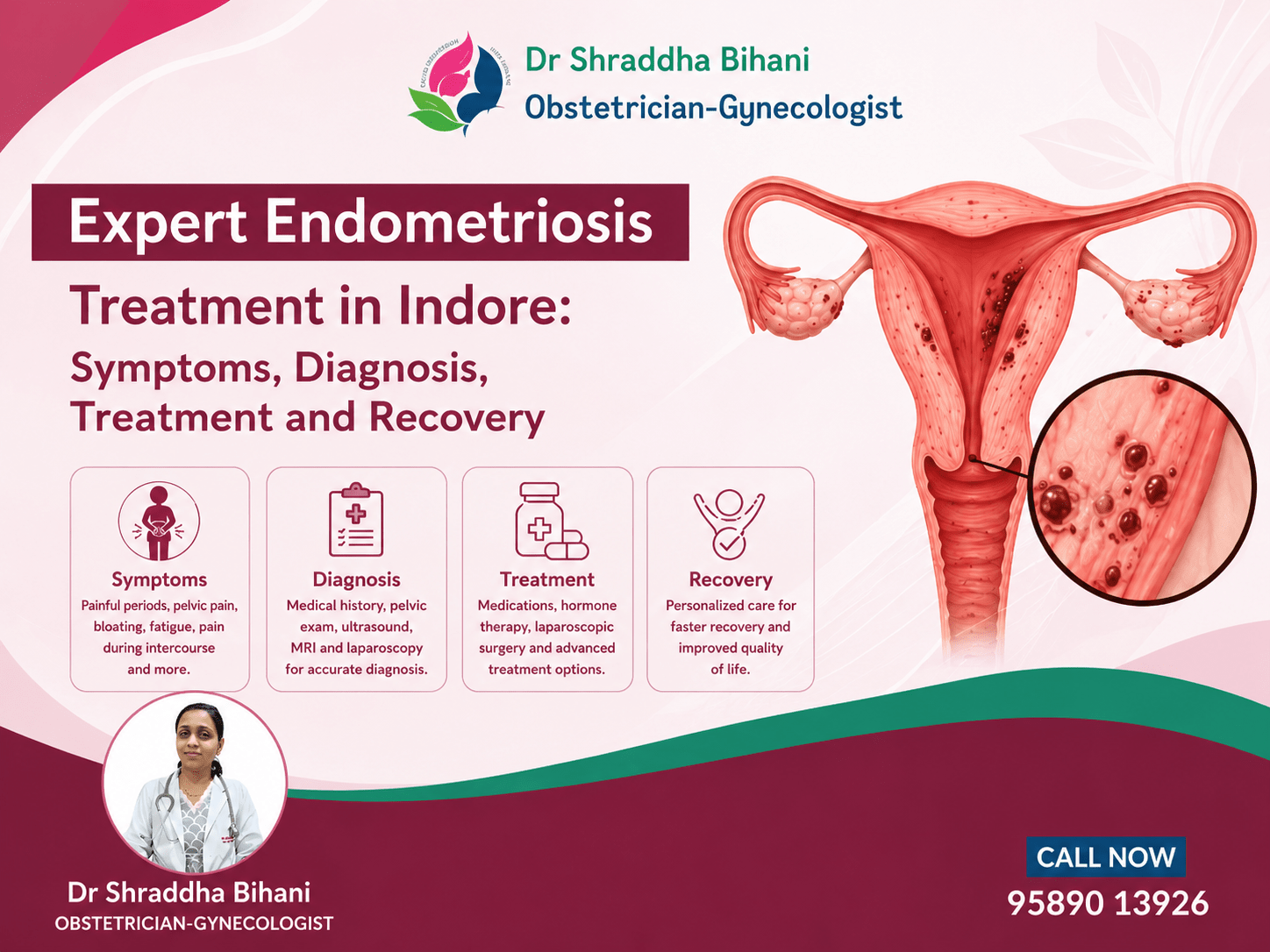
Endometriosis Treatment in Indore can be difficult to recognize because its symptoms can look similar to common menstrual problems. Severe period pain, pelvic pain, heavy bleeding, painful intercourse, bowel or urinary symptoms, and difficulty conceiving can sometimes be associated with the condition. Endometriosis affects an estimated 10% of women of reproductive age worldwide, and delays in diagnosis are common.
The search for Expert Endometriosis Treatment in Indore often begins when period pain starts interfering with work, studies, relationships, or everyday activities. While some menstrual discomfort can be normal, severe or recurring pain should not simply be ignored.
Dr. Shraddha Bihani is an experienced gynecologist in Indore with more than 15 years of clinical experience. She manages a wide range of gynecological conditions and provides patient-focused care, including pregnancy care, normal deliveries, and high-risk pregnancy management.
What Is Endometriosis?
Endometriosis is a chronic condition in which tissue similar to the lining of the uterus grows outside the uterus. This tissue can cause inflammation and may contribute to scar tissue and adhesions over time.
Endometriosis most commonly affects areas within the pelvis, although it can occur elsewhere in the body. Symptoms can vary considerably from one person to another. Some people experience severe pain, while others may have relatively few symptoms.
Endometriosis Treatment in Indore is therefore not the same for every patient. Treatment depends on symptoms, disease extent, age, overall health, fertility plans, previous treatment, and individual preferences.
Why Does Endometriosis Happen?
The exact cause of endometriosis is not completely understood. Research suggests that several biological, genetic, hormonal, and immune-related factors may be involved.
Endometriosis can affect people differently, and having a family history may increase the likelihood of developing the condition. However, there is no single factor that can predict with certainty who will develop endometriosis.
Because the cause is complex, Endometriosis Treatment in Indore generally focuses on controlling symptoms, managing disease-related problems, protecting quality of life, and addressing fertility concerns when needed.
What Are the Symptoms of Endometriosis?
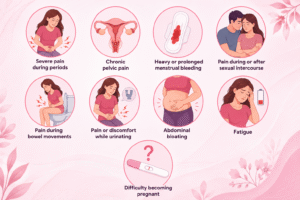
Endometriosis symptoms can range from mild to severe. Common symptoms may include:
- Severe pain during periods
- Chronic pelvic pain
- Heavy or prolonged menstrual bleeding
- Pain during or after sexual intercourse
- Pain during bowel movements
- Pain or discomfort while urinating
- Abdominal bloating
- Fatigue
- Difficulty becoming pregnant
Not every person experiences all of these symptoms. Some people may have endometriosis with few noticeable symptoms, while others may experience significant pain that affects everyday life.
If period pain repeatedly prevents you from following your normal routine, it is worth discussing it with a gynecologist rather than assuming it is simply part of menstruation.
Who May Be at Risk of Endometriosis?
Endometriosis can affect people from the beginning of menstruation through menopause.
A family history of endometriosis may be associated with increased risk, and the condition can occur across different age groups. Because symptoms are sometimes normalized as “bad periods,” diagnosis may be delayed.
Women experiencing persistent pelvic pain, painful periods, pain during intercourse, or unexplained fertility problems may benefit from a gynecological evaluation.
An Endometriosis Specialist in Indore can assess the symptoms and determine whether further examination or investigations are needed.
When Should You See a Gynecologist?
You should consider a consultation if:
- Period pain is severe or getting worse
- Pain continues outside your periods
- Pain affects work, studies, or daily activities
- You experience pain during intercourse
- You have bowel or urinary pain around menstruation
- Your periods are unusually heavy
- You have difficulty conceiving
- Pain medicines are no longer providing adequate relief
Severe menstrual pain should not automatically be considered normal. WHO notes that very painful, heavy, or disruptive menstrual symptoms can indicate an underlying condition such as endometriosis and deserve medical evaluation.
How Is Endometriosis Diagnosed?
Diagnosing endometriosis usually begins with a detailed medical and menstrual history.
The doctor may ask about:
- When your pain begins
- How long the pain lasts
- Severity of menstrual pain
- Bleeding pattern
- Pain during intercourse
- Bowel or urinary symptoms
- Previous pregnancy history
- Fertility concerns
- Previous treatments
A physical examination may also be performed when appropriate.
Ultrasound and other imaging techniques can help identify certain forms of endometriosis and related conditions. MRI may be useful in selected cases. Surgery is not always required before treatment can begin, depending on the clinical situation and available imaging.
Can Ultrasound Detect Endometriosis?
Ultrasound can be useful in evaluating suspected endometriosis, particularly when performed by someone experienced in recognizing features associated with the condition.
However, a normal ultrasound does not necessarily mean that endometriosis is impossible. Some forms of the disease may not be visible on routine imaging.
This is why Endometriosis Treatment in Indore should begin with proper clinical assessment rather than relying on a single test.
The 2024 update to NICE guidance emphasizes the role of imaging in the diagnostic pathway while recognizing that clinical judgment remains important.
What Are the Treatment Options for Endometriosis?
There is currently no treatment that permanently cures endometriosis. Instead, treatment aims to control symptoms, improve quality of life, manage disease-related problems, and address fertility goals when relevant.
Treatment may include:
Pain Management
Pain-relieving medicines may be used to manage endometriosis-related pain. The choice of medicine depends on the patient’s health, other medications, and individual circumstances.
Hormonal Treatment
Hormonal medicines can reduce the activity of endometrial-like tissue and may help decrease pain in some patients.
Options can include combined hormonal contraceptives, progestins, hormonal intrauterine systems, and other hormone-modulating medicines. Some treatments may not be suitable when pregnancy is actively desired.
Surgical Treatment
Surgery may be considered when symptoms are significant, medication is not sufficient or suitable, or when particular forms of endometriosis require surgical management.
The decision depends on the extent of disease, symptoms, previous treatments, fertility plans, and individual circumstances.
What Is Endometriosis Surgery?
In selected patients, surgery may be used to remove visible endometriosis lesions, adhesions, or scar tissue.
Laparoscopic surgery is commonly used for surgical management because it involves small abdominal incisions and allows the surgeon to examine the pelvic organs directly.
However, surgery is not automatically required for every patient. Modern diagnostic pathways recognize that treatment can sometimes begin based on symptoms and imaging without waiting for surgical confirmation.
For patients considering Endometriosis Surgery in Indore, the benefits, risks, possible effect on fertility, and possibility of recurrence should be discussed carefully with the treating gynecologist.
Endometriosis and Fertility
Endometriosis can affect fertility in some patients. Inflammation, adhesions, changes around the reproductive organs, and other factors may contribute to difficulty conceiving.
However, having endometriosis does not mean that pregnancy is impossible.
Treatment should be planned according to whether pregnancy is currently desired. Fertility treatment options may include ovulation-related treatments, IUI, IVF, or other approaches depending on the patient’s individual situation.
For women planning pregnancy, an Endometriosis Specialist in Indore can help develop a treatment approach that takes fertility goals into account.
Endometriosis Treatment and Pregnancy Planning
Pregnancy plans can significantly influence the choice of treatment.
Some hormonal treatments used for symptom control are contraceptive and therefore are not appropriate when a patient is actively trying to conceive.
When fertility is a priority, treatment decisions may instead focus on the patient’s age, ovarian reserve where relevant, disease severity, duration of infertility, partner factors, and other fertility considerations.
NICE updated its recommendations in 2024 to include specific considerations for endometriosis when fertility is a priority.
This is why Endometriosis Treatment in Indore should be personalized rather than based on a standard treatment package.
Can Endometriosis Come Back After Treatment?
Endometriosis is a chronic condition, and symptoms can return after treatment in some patients.
The possibility of recurrence depends on several factors, including the extent of disease, type of treatment, hormonal environment, and individual response.
Because of this, treatment should not end simply when the initial symptoms improve. Follow-up can help identify recurring symptoms and determine whether the treatment plan needs to be adjusted.
Long-term management is an important part of Expert Endometriosis Treatment in Indore.
What Is Recovery Like After Endometriosis Surgery?
Recovery depends on the type and extent of surgery performed.
After laparoscopic procedures, some patients may experience temporary:
- Abdominal discomfort
- Bloating
- Fatigue
- Shoulder-tip discomfort from the gas used during laparoscopy
- Mild soreness around the incision sites
Your surgeon will provide specific instructions regarding activity, medication, wound care, and follow-up.
Recovery time varies from person to person, so it is better to follow your doctor’s advice rather than comparing your recovery with someone else’s experience.
Can Lifestyle Changes Help With Endometriosis?
Lifestyle measures do not cure endometriosis, but they may support overall well-being and help some people manage the impact of chronic symptoms.
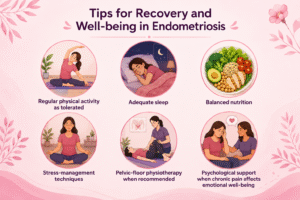
Depending on individual needs, supportive measures may include:
- Regular physical activity as tolerated
- Adequate sleep
- Balanced nutrition
- Stress-management techniques
- Pelvic-floor physiotherapy when recommended
- Psychological support when chronic pain affects emotional well-being
WHO notes that multidisciplinary approaches, including physiotherapy and cognitive behavioural therapy in appropriate patients, may help reduce pain and improve quality of life.
What Makes Endometriosis Difficult to Diagnose?
Endometriosis can be challenging to diagnose because symptoms vary widely and may overlap with other gynecological or gastrointestinal conditions.
Some patients have severe symptoms without obvious findings on an initial examination, while others may have endometriosis with few symptoms.
WHO reports that delays in diagnosis are common and that the average time to diagnosis can range from 4 to 12 years in different settings.
This is why persistent symptoms deserve attention rather than being repeatedly dismissed as ordinary period pain.
Why Choose Dr. Shraddha Bihani for Gynecological Care?
Her gynecological care includes routine and complex cases, pregnancy care, normal deliveries, and high-risk pregnancy management. She provides services across areas of Indore including Anampurna Road, Usha Nagar, Bank Colony, and Vaishali Nagar.
For women looking for an Endometriosis Specialist in Indore, a detailed consultation can help identify the symptoms, understand possible causes, and determine whether further testing or treatment is required.
Unique Approach to Care
Dr. Shraddha Bihani believes that every pregnancy should be a safe, positive, and memorable experience. She works closely with patients throughout their care and focuses on providing support and confidence during pregnancy.
Her approach includes special attention to normal deliveries, while high-risk pregnancies are managed with additional medical attention and expertise.
This patient-centred approach is also important when discussing chronic gynecological conditions, where patients may need clear explanations, follow-up, and individualized treatment decisions.
Community Involvement
Dr. Shraddha Bihani also participates in women’s health awareness activities. Her community involvement includes organizing health camps focused on women’s health and cancer screenings.
Health awareness can play an important role in encouraging women to seek medical attention when symptoms such as severe period pain, abnormal bleeding, or persistent pelvic pain are affecting their daily lives.
When Should You Consider Expert Endometriosis Treatment in Indore?
You should consider a gynecological consultation if you experience:
- Severe period pain
- Recurring pelvic pain
- Pain during intercourse
- Painful bowel movements during periods
- Pain while urinating around menstruation
- Heavy menstrual bleeding
- Persistent bloating or fatigue
- Difficulty conceiving
- Pain that is affecting your everyday activities
Expert Endometriosis Treatment in Indore begins with understanding your symptoms and determining whether they may be related to endometriosis or another condition.
Early evaluation can help avoid years of untreated symptoms and may allow appropriate management to begin sooner.
Summary
Endometriosis is a chronic condition that can cause severe menstrual pain, pelvic pain, heavy bleeding, painful intercourse, bowel or urinary symptoms, and fertility problems. It affects an estimated 10% of women of reproductive age worldwide.
Endometriosis Treatment in Indore depends on the patient’s symptoms, disease extent, treatment preferences, and whether pregnancy is desired.
Treatment may involve pain management, hormonal medicines, surgery in selected cases, fertility care, and supportive approaches such as physiotherapy. There is currently no definitive cure, so long-term management and follow-up can be important.
For women considering Endometriosis Surgery in Indore, the decision should be based on an individual assessment of symptoms, imaging findings, fertility goals, and potential benefits and risks.
FAQs – Expert Endometriosis Treatment in Indore
What is endometriosis?
Endometriosis is a chronic condition in which tissue similar to the lining of the uterus grows outside the uterus. It can cause inflammation, pain, adhesions, and sometimes fertility problems.
What are the most common symptoms of endometriosis?
Common symptoms include severe period pain, chronic pelvic pain, heavy menstrual bleeding, painful intercourse, painful bowel movements, urinary pain, bloating, fatigue, and difficulty conceiving.
Is severe period pain normal?
Mild menstrual discomfort can occur, but severe or disruptive pain should not simply be dismissed as normal. Persistent or severe menstrual symptoms deserve medical evaluation.
Can endometriosis cause infertility?
Endometriosis can affect fertility in some patients, but having endometriosis does not mean that pregnancy is impossible. Fertility treatment should be individualized according to the patient’s circumstances and pregnancy goals.
Can ultrasound detect endometriosis?
Ultrasound can help identify some forms of endometriosis and related pelvic conditions. However, a normal ultrasound does not necessarily exclude endometriosis, so symptoms and clinical assessment remain important.
Is surgery always required for endometriosis?
No. Surgery is not automatically required for every patient. Depending on the symptoms and clinical findings, treatment may begin with medicines and other approaches. Surgery may be considered in selected cases.
What is Endometriosis Surgery in Indore?
Endometriosis surgery is a procedure used in selected patients to remove endometriosis lesions, adhesions, or scar tissue. The type and extent of surgery depend on the individual disease pattern and treatment goals.
Can endometriosis return after treatment?
Yes. Symptoms or disease can recur in some patients after treatment. Regular follow-up can help identify recurring symptoms and guide further management.
Can endometriosis be completely cured?
There is currently no definitive cure for endometriosis. Treatment focuses on controlling symptoms, improving quality of life, and addressing fertility or other complications when needed.
Who should I consult for endometriosis?
A qualified gynecologist can evaluate symptoms, recommend appropriate investigations, and discuss medical, surgical, or fertility-related treatment options. Dr. Shraddha Bihani has more than 15 years of clinical experience in gynecological care.
What is the best treatment for endometriosis?
There is no single treatment that is best for everyone. The appropriate Endometriosis Treatment in Indore depends on symptoms, disease severity, age, previous treatment, overall health, and whether pregnancy is desired.
Conclusion – Expert Endometriosis Treatment in Indore
Endometriosis can have a significant effect on a woman’s comfort, daily activities, relationships, and fertility. Severe period pain or persistent pelvic pain should not simply be accepted as a normal part of menstruation.
Expert Endometriosis Treatment in Indore involves more than treating pain temporarily. It starts with understanding the symptoms, assessing the possible cause, using appropriate investigations when needed, and selecting treatment according to the patient’s individual needs.
Endometriosis Treatment in Indore may include pain management, hormonal medicines, surgery in selected patients, fertility care, and supportive therapies. Since endometriosis is a chronic condition, ongoing monitoring may also be important.
Dr. Shraddha Bihani’s patient-focused approach, more than 15 years of clinical experience, and commitment to women’s health provide a supportive setting for women seeking gynecological care in Indore.